
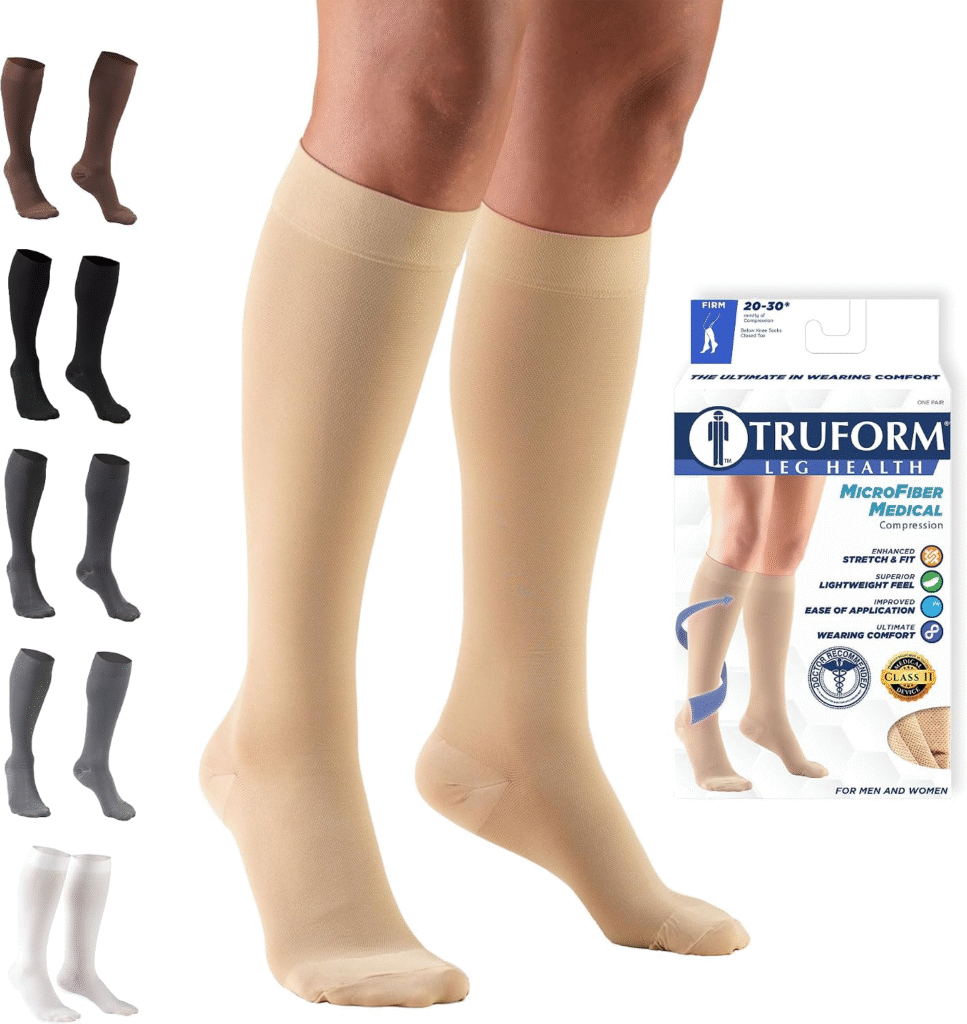
Varicose veins can affect how your legs look, but for many people, the bigger concern is how their legs feel throughout the day. Aching, swelling, heaviness, itching, and tiredness can become particularly noticeable after standing for long hours or sitting without much movement. Compression stockings for varicose veins are commonly used to help manage some of these symptoms.
Designed to provide graduated pressure around the legs, compression stockings can support circulation and provide a comfortable feeling of support. However, selecting the right pair requires more than simply choosing a stocking that feels tight.
What Makes Compression Stockings Different?
Regular socks are mainly designed for comfort, warmth, or style. Compression stockings are made differently. Their fabric is engineered to apply a specific amount of pressure to the leg.
Graduated compression is commonly tighter around the ankle and gradually decreases toward the upper leg. This design is intended to support the movement of blood from the lower legs toward the heart.
Because compression levels vary, two pairs of stockings can look similar while providing very different amounts of pressure.
Why People With Varicose Veins Use Compression
When the valves in leg veins don’t work efficiently, blood can pool in the lower limbs. This may contribute to increased pressure within the veins and symptoms such as swelling and discomfort.
Compression stockings provide external pressure around the leg, which can support the veins and surrounding tissues. For some people, this can make their legs feel less heavy or swollen during the day.
They are particularly useful as a symptom-management tool rather than a treatment that removes the veins themselves.
Common Symptoms Compression May Help Manage
Depending on the individual, compression stockings may help with:
- Mild to moderate leg swelling
- Aching or discomfort
- A feeling of heaviness
- Tired legs
- Discomfort after prolonged standing
- Some symptoms associated with venous circulation problems
Results vary from person to person, so compression shouldn’t be viewed as a guaranteed solution for every case of varicose veins.
Selecting the Right Compression Level
Compression level is usually expressed in mmHg. The number represents the pressure produced by the stocking.
Lower compression options may be suitable for everyday support, while higher levels may be recommended for particular medical conditions.
If you’re unsure which level to choose, especially if you have diagnosed vein or circulation problems, speak with a healthcare professional. Using stronger compression without appropriate guidance isn’t necessarily more effective.
Why Fit Matters
A well-fitting compression stocking should feel snug but should not cause significant pain.
If the stocking is too loose, it may slide down and fail to provide consistent compression. If it’s too tight, it may become uncomfortable and difficult to wear.
Look for a product with a clear sizing chart. Measure your leg according to the manufacturer’s instructions rather than relying solely on your normal clothing size.
Choosing Between Different Lengths
Compression stockings are available in several lengths.
Knee-high: A convenient option when symptoms are primarily in the lower legs.
Thigh-high: Extends above the knee and can provide compression over a larger area.
Full-length: Covers most or all of the leg and may be recommended in certain circumstances.
The most suitable length depends on your symptoms, the location of the affected veins, and professional recommendations when medical compression is required.
When to Wear Compression Stockings
Many people wear compression stockings during the daytime. They may be particularly useful during activities involving prolonged sitting or standing.
For example, wearing them during a long work shift may help some people manage feelings of tiredness and heaviness. They may also be useful during travel or other situations involving extended periods of sitting.
Always follow the instructions provided with the specific product and any advice given by your healthcare professional.
Putting Them On Properly
Compression stockings can take some practice to put on.
It is often easier to put them on in the morning, before swelling becomes more noticeable. Make sure the stocking is positioned correctly around the foot and heel before gradually working it up the leg.
Don’t bunch the material around your ankle or calf. Smooth out wrinkles so the pressure remains evenly distributed.
Avoid folding the top of the stocking downward, as this can create an uncomfortable pressure point.
Keeping Your Stockings Clean
Regular care is important because compression stockings are worn close to the skin.
Follow the manufacturer’s washing instructions carefully. Avoid using cleaning methods that could damage the elastic fibers.
After washing, inspect the stocking for signs of stretching or damage. Maintaining the elasticity helps the garment continue providing consistent support.
What If Compression Stockings Feel Too Tight?
Compression stockings are supposed to feel snug, but they shouldn’t cause severe discomfort.
If you notice numbness, unusual discoloration, significant pain, or other concerning changes while wearing them, remove the stockings and seek medical advice.
Persistent discomfort may indicate that the size or compression level isn’t appropriate.
Can You Wear Them Every Day?
Some people use compression stockings regularly as part of their daily routine. Whether daily use is appropriate depends on the reason for compression and your individual circumstances.
If a healthcare professional has recommended compression, follow their instructions about when and how long to wear the stockings.
For general-purpose products, follow the manufacturer’s guidance.
Compression Stockings and Lifestyle Habits
Compression stockings can be combined with simple lifestyle habits that encourage regular movement.
Walking, changing positions throughout the day, and avoiding prolonged periods of sitting or standing may support healthy circulation.
When resting, some people may also find that elevating their legs helps with swelling.
These habits don’t replace medical treatment when treatment is needed, but they can complement an overall approach to leg health.
When Compression May Not Be Appropriate
Compression isn’t suitable for everyone. Certain conditions affecting blood flow to the legs may require medical assessment before compression is used.
If you have an existing circulation disorder, unexplained swelling, significant pain, skin changes, or another medical concern involving your legs, consult a healthcare professional before choosing compression stockings.
When Varicose Veins Need Medical Attention
Most varicose veins aren’t an emergency, but certain symptoms deserve professional evaluation.
Contact a healthcare professional if you notice persistent pain, significant swelling, skin changes, sores, or bleeding from a varicose vein.
Sudden swelling or severe pain in one leg, particularly when accompanied by warmth or redness, should be assessed promptly rather than simply treated with compression.
Final Thoughts
Compression stockings for varicose veins can be a useful option for managing symptoms such as swelling, aching, heaviness, and tired legs. Their graduated pressure provides targeted support and may improve comfort during everyday activities.
The key is choosing the correct compression level, size, and length. Compression stockings don’t eliminate existing varicose veins, but when used appropriately, they can be a practical part of a broader strategy for managing symptoms and supporting comfortable movement.