
Introduction
In self centering vise, surface finish is often seen as the result of cutting parameters, tool quality, spindle condition, and machine rigidity. All of these factors matter, but they do not work alone. One of the most important influences on surface quality is the stability of the setup itself. If the workpiece is not held securely and consistently, even a strong machine and a good program may struggle to produce the finish the shop expects.
Stable workholding helps create the conditions that allow cutting tools to perform properly. It reduces unwanted movement, limits vibration, and gives the machining process a more reliable foundation from the start. In daily production, this can make a major difference not only in part appearance, but also in dimensional consistency, tool life, and overall process confidence.
That is why stable workholding should be considered a key part of surface finish control in CNC milling.
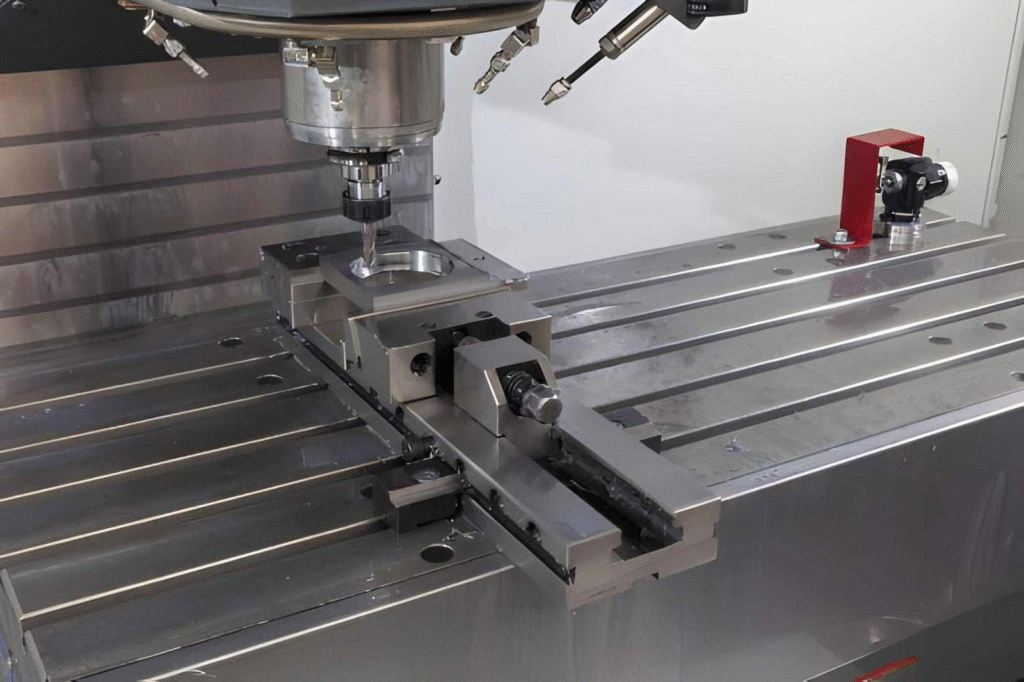
Surface Finish Depends on Process Stability
A good surface finish does not happen by accident. It comes from a stable cutting process in which the tool engages the material in a predictable way. When the part is clamped securely, the cutter can follow its programmed path with less interruption from movement or vibration. This helps create smoother surfaces and more consistent results from one part to the next.
When workholding is unstable, the opposite happens. Even slight movement in the workpiece can change the way the tool contacts the material. That variation may create visible marks, inconsistent texture, or a finish that does not meet the required standard. In some cases, the part may still be dimensionally acceptable, but the surface quality reveals that the setup lacked proper stability.
This is why surface finish should not be viewed only as a tooling or programming issue. It is also a setup issue.
Vibration Is One of the Biggest Enemies of Surface Quality
One of the most common causes of poor finish in milling is vibration. When the workpiece is not supported well enough, cutting forces can create small but damaging movement during the machining cycle. This often leads to chatter, waviness, or an uneven surface that is difficult to correct without additional work.
Stable workholding helps reduce this risk by keeping the part more rigid throughout the cut. It gives the workpiece stronger resistance against changing tool pressure and helps the machine maintain smoother engagement with the material. This is especially important when machining harder materials, thin features, or parts that extend above the clamping area.
The more stable the setup, the easier it becomes to protect the surface from unwanted tool marks caused by vibration. In this way, workholding directly influences the visual and functional quality of the final part.
Better Clamping Improves Tool Performance
Surface finish is closely connected to how well the tool performs. A tool that cuts under stable conditions can maintain a more consistent chip load, create cleaner passes, and wear more evenly over time. Unstable workholding makes this much harder.
If the part shifts slightly or reacts unevenly under cutting pressure, the tool may experience irregular engagement. This can affect the finish immediately and may also shorten tool life. As wear becomes less predictable, surface quality often becomes harder to control across longer runs.
Stable workholding supports better tool performance by reducing these variations. It helps the cutter operate in a more controlled environment, which improves not only finish quality but also process reliability. For shops trying to maintain consistent results over multiple parts, this is a major advantage.
Surface Finish Matters for More Than Appearance
Some people think surface finish is mainly about appearance, but in many CNC applications it has a broader role. Surface quality can affect assembly, sealing performance, wear behavior, and the way a customer judges part quality. In precision manufacturing, a poor finish may cause the part to fail inspection even if the dimensions are within tolerance.
Because of this, finish quality should be treated as a serious production requirement rather than a cosmetic detail. Stable workholding supports that requirement by reducing the setup-related variables that often damage the final result.
When a shop improves setup stability, it often sees benefits beyond appearance alone. The process becomes more predictable, secondary finishing work may be reduced, and the overall quality level becomes easier to maintain. These are valuable gains in both precision work and general production.
Setup Stability Helps Operators Make Better Decisions
Stable workholding also improves the human side of the process. When operators trust the setup, they can make machining decisions with more confidence. They are less likely to reduce cutting parameters out of caution or spend extra time checking whether the part is secure enough for a finishing pass.
This matters because uncertainty often leads to compromise. If the setup feels weak, the operator may choose safer but less efficient conditions, which can affect both finish and productivity. In other cases, a finish problem may be blamed on tooling when the real issue is insufficient workholding stability.
A dependable setup makes the process easier to read. It gives the operator clearer feedback and reduces the guesswork that often slows improvement. Over time, this helps build stronger process control on the shop floor.
Stable Workholding Becomes More Important in Precision Work
As tolerances tighten and part designs become more demanding, the importance of workholding stability continues to grow. Precision milling often involves finer finishing passes, thinner walls, smaller tools, and greater surface expectations. Under these conditions, even minor setup weakness can create noticeable problems.
A stable setup provides the support needed for these more sensitive operations. It helps the machine, tool, and program work together more effectively and reduces the chance that finishing quality will be damaged by avoidable mechanical variation.
For shops trying to maintain a high standard of surface quality, stable workholding is not optional. It is one of the conditions that make precision finishing possible.
Conclusion
Stable workholding is essential for better surface finish in vise cnc because it supports a smoother, more controlled cutting process. It reduces vibration, improves tool performance, and helps maintain the consistency needed for high-quality results.
Surface finish depends on more than cutting data and tooling alone. It also depends on how securely and predictably the workpiece is held throughout the operation. When the setup is stable, the entire process becomes easier to manage, and better finish quality becomes much more achievable.
For CNC shops focused on stronger results, workholding stability is one of the most practical ways to improve both part quality and daily machining reliability.