
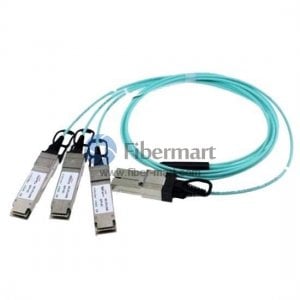
As modern data centers and enterprise networks continue to demand higher bandwidth and faster data transmission, adopting the right cabling solutions has become critical. The 100G QSFP28 active optical cable is an ideal choice for organizations looking to enhance their network infrastructure with high-speed connectivity. These cables offer reliable performance, lower power consumption compared to traditional copper solutions, and seamless integration with existing network equipment. This article explores best practices for implementing 100G QSFP28 active optical cables in your network, ensuring optimal performance and longevity.
Understanding 100G QSFP28 Active Optical Cables
The 100G QSFP28 active optical cable (AOC) is a high-speed interconnect designed to handle 100 Gigabit Ethernet transmission over relatively short distances. Unlike passive copper cables, AOCs incorporate optical transceivers within the cable assembly, converting electrical signals to optical signals for transmission. This provides several advantages, including reduced signal degradation, lower heat output, and the ability to maintain high-speed connectivity over distances ranging from a few meters to around 100 meters.
Fiber-MART’s 100G QSFP28 active optical cables are widely recognized for their reliability, quality, and compatibility with leading network switches and servers. When properly implemented, these cables can significantly improve network performance and scalability.
Assess Your Network Requirements
Before deploying 100G QSFP28 active optical cables, it is essential to conduct a thorough assessment of your network needs. Determine the following:
- Bandwidth requirements: Evaluate current and future traffic loads to ensure your network can fully utilize 100G connectivity.
- Distance and topology: Identify the physical distance between devices, as AOCs are optimal for short to medium-range connections.
- Compatibility: Ensure that your switches, routers, and servers support QSFP28 interfaces. Fiber-MART provides comprehensive compatibility information to help select the right AOC for your setup.
- Environmental conditions: Consider factors such as temperature, airflow, and potential electromagnetic interference that may affect cable performance.
Taking the time to analyze these factors can prevent network bottlenecks and reduce the risk of costly upgrades later.
Plan Your Cable Layout
A well-organized cable layout is crucial for maintaining signal integrity and simplifying network management. Follow these guidelines:
- Minimize bends: Avoid tight bends or kinks in the cable, as excessive bending can degrade signal quality and damage the internal optical fibers.
- Label and document: Clearly label each 100G QSFP28 active optical cable and maintain a detailed record of cable routing. This practice simplifies troubleshooting and future upgrades.
- Maintain proper separation: Keep optical cables separate from high-power electrical lines to reduce interference and potential damage.
- Plan for airflow: Ensure that cables do not obstruct cooling pathways in racks or cabinets. Proper airflow prevents overheating and maintains optimal performance.
Fiber-MART’s AOCs are designed with flexible sheathing, allowing for easier routing in dense data center environments without compromising durability.
Proper Handling and Installation Techniques
Handling 100G QSFP28 active optical cables correctly is critical to maintaining signal integrity and avoiding damage:
- Avoid excessive pulling: Do not pull the cable with excessive force. Always follow manufacturer-recommended bend radius guidelines, which are usually around 30 mm for QSFP28 cables.
- Use ESD precautions: Static discharge can damage sensitive optical components. Use antistatic wrist straps and mats when handling cables.
- Check connectors: Ensure that connectors are clean and free of dust. Fiber-MART provides cables with high-quality, pre-polished connectors to minimize insertion loss.
- Secure connections: Insert the QSFP28 connector fully into the port until it clicks. Loose connections can cause intermittent network issues.
Following proper installation techniques helps extend the lifespan of your cables and prevents downtime due to faulty connections.
Test and Verify Performance
Once your 100G QSFP28 active optical cables are installed, testing is essential to confirm optimal performance:
- Conduct link tests: Use network testing tools to verify signal strength, error rates, and latency across each cable. Fiber-MART provides documentation for expected performance metrics.
- Check interoperability: Confirm that all connected devices properly recognize the AOC and that data transmission occurs at the expected 100G speeds.
- Monitor temperature: Although AOCs produce less heat than copper cables, monitoring temperature in high-density setups ensures stable operation over time.
- Document results: Maintain test results and configurations as part of your network documentation for future reference and troubleshooting.
Regular testing helps prevent performance degradation and ensures that your network remains highly efficient.
Maintain and Monitor Your Network
Implementing 100G QSFP28 active optical cables is not a one-time task. Ongoing maintenance and monitoring are essential to sustain performance:
- Inspect cables regularly: Check for signs of wear, kinks, or connector damage. Replace any compromised cables immediately.
- Update firmware: Keep switches and transceivers up to date with the latest firmware to ensure compatibility and performance optimization.
- Monitor traffic loads: Use network monitoring tools to identify congestion or bottlenecks that may require cable or equipment upgrades.
- Plan for scalability: As your network grows, consider future expansion needs. Fiber-MART offers a wide range of 100G QSFP28 AOCs to support evolving data center requirements.
By proactively maintaining and monitoring your network, you can maximize the lifespan and reliability of your optical cables.
Advantages of Using Fiber-MART 100G QSFP28 Active Optical Cables
Choosing a reputable supplier is key to successful implementation. Fiber-MART’s 100G QSFP28 active optical cables offer several benefits:
- High reliability: Manufactured under strict quality control standards to ensure consistent performance.
- Plug-and-play design: Easy installation with no additional transceivers or configuration needed.
- Low power consumption: Reduces energy usage and heat output compared to traditional copper solutions.
- Wide compatibility: Works seamlessly with a variety of switches, routers, and servers, minimizing the risk of hardware conflicts.
- Cost-effective scaling: Ideal for data centers and enterprise networks planning to upgrade to 100G speeds without excessive infrastructure costs.
By leveraging Fiber-MART’s solutions, network administrators can deploy high-speed connections efficiently while reducing operational challenges.
Conclusion
Implementing 100G QSFP28 active optical cables is a strategic move for organizations looking to enhance network performance and future-proof their infrastructure. From assessing network requirements and planning cable layouts to proper handling, installation, testing, and ongoing maintenance, following best practices ensures optimal performance and reliability. Fiber-MART’s high-quality AOCs provide a robust, cost-effective solution that integrates seamlessly into modern data centers and enterprise networks. By adopting these practices, you can maximize the benefits of 100G connectivity and support the growing demands of today’s high-speed digital environment.